Westcountry Rivers Trust Citizen Scientist Project
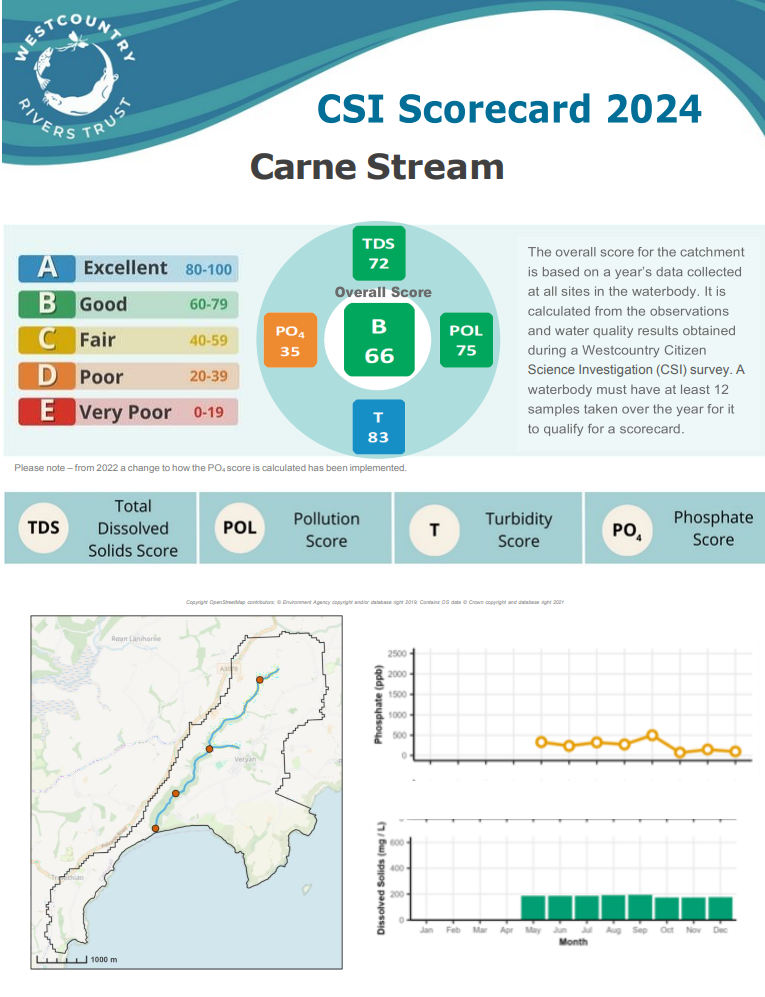
REACT volunteers have now been collecting water quality along Pendower Stream for nearly a year. We submit our data to the Westcountry Rivers Trust Citizen Science project (CSI) and have just received a summary of our 2024 data from them as a scorecard. The Trust calls this Carne, but we refer to it as Pendower Stream (see map) and combines the data from all four sampling stations. It still provides an interesting insight. Over the year, the stream is scored as overall in 'Good' condition but looking just at dissolved phosphate it is recorded as 'Poor'. Dissolved phosphate can appear in river water in higher concentrations than normal as a result of run-off from fertilised fields but also from detergents discharged from sewage treatment works. UK Government guidance recommends that rivers should not exceed an annual mean of 0.1mg/l (100ppb) phosphate. Looking at our raw data, interestingly at the site furthest upstream the average phosphate level was less than 0.1mg, however downstream of the discharge from Veryan sewage treatment works the annual average was as high as 0.3 mg/l at for example Lower Mill. This may suggest that the additional nutrients in the stream is the result of treated sewage water rather than agriculture in this case. Note, however there have been no signs of untreated sewage being discharged and the Environment Agency has given Pendower Beach a good rating throughout the year with no recording of E-Coli bacteria.
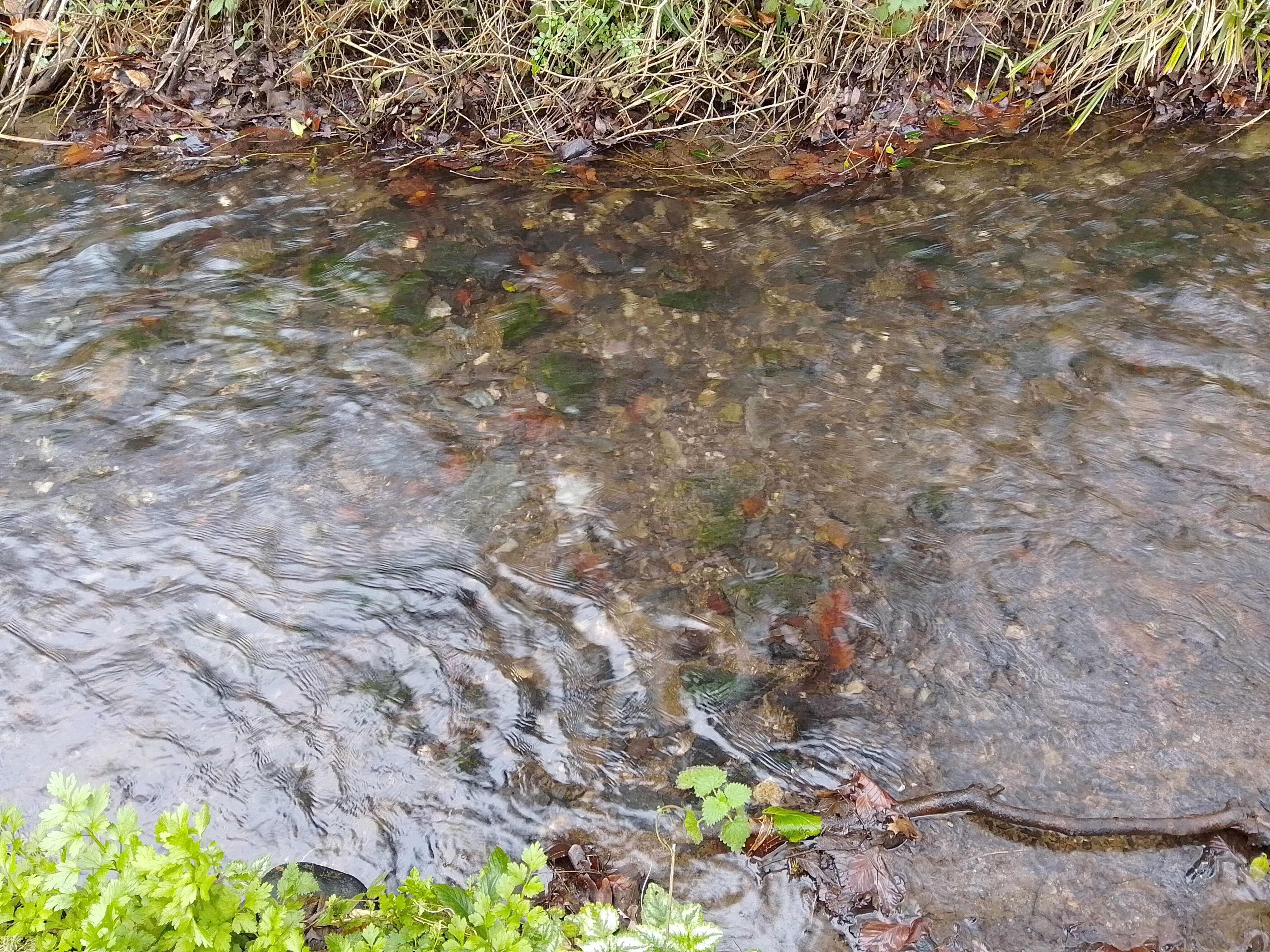
Although not part of the CSI submission, we have also started to record dissolved nitrate and again there are some early indications that increased levels are the result of discharges from Veryan rather than from agriculture. The picture (from downstream of the sewage treatment works) shows the growth on the streambed of filamentous algae ('blanket' weed) which develops with enhanced nutrient levels. This increased algal growth means higher oxygen levels during the day but at night those levels fall as the algae respires but can't photosynthesise. This can result in a loss of invertebrates from the stream and we hope to include a survey of the stream fauna in surveys later in the year.